

L’articolo è stato aggiunto alla lista dei desideri








![Ragionamento nel quale Pietro Aretino figura quattro suoi amici. Che favellano de le corti del mondo, & di quella del cielo. N.pl., n. pr., n.d. [not before 1538] - Pietro Aretino - copertina](https://www.ibs.it/images/2570270144608_0_0_536_0_75.jpg)
LIBRO VINTAGE
 E-mail
 Facebook
 LinkedIn
 Twitter
 WhatsApp
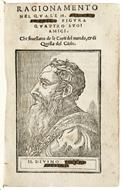
Ragionamento nel quale Pietro Aretino figura quattro suoi amici. Che favellano de le corti del mondo, & di quella del cielo. N.pl., n. pr., n.d. [not before 1538]
(0)
Cliccando su “Conferma” dichiari che il contenuto da te inserito è conforme alle Condizioni Generali d’Uso del Sito ed alle Linee Guida sui Contenuti Vietati. Puoi rileggere e modificare e successivamente confermare il tuo contenuto. Tra poche ore lo troverai online (in caso contrario verifica la conformità del contenuto alle policy del Sito).
Grazie per la tua recensione!
Tra poche ore la vedrai online (in caso contrario verifica la conformità del testo alle nostre linee guida). Dopo la pubblicazione per te +4 punti 
Dati e Statistiche
 Salvato in 0 liste dei desideri
Salvato in 0 liste dei desideri
Ragionamento nel quale Pietro Aretino figura quattro suoi amici. Che favellano de le corti del mondo, & di quella del cielo. N.pl., n. pr., n.d. [not before 1538]
Disponibilità immediata
5.800,00 €
5.800,00 €
Disp. immediata
Altre offerte vendute e spedite dai nostri venditori
Libri Vintage
Ragionamento nel quale Pietro Aretino figura quattro suoi amici. Che favellano de le corti del mondo, & di quella del cielo. N.pl., n. pr., n.d. [not before 1538]
Altri venditori
Prezzo e spese di spedizione
Usato - Condizione accettabile
 disponibilità immediata
 Venduto e spedito da
Libreria Alberto Govi
Venduto e spedito da
Libreria Alberto Govi
 5/
5
(2 opinioni)
5/
5
(2 opinioni)
disponibilità immediata
5/
5
(2 opinioni)
Spedizione 5,00 €
5.800,00 €
Altri venditori
Prezzo e spese di spedizione
Altri venditori
Prezzo e spese di spedizione
Usato - Condizione accettabile
disponibilità immediata
Venduto e spedito da
Libreria Alberto Govi
5/
5
(2 opinioni)
disponibilità immediata
5/
5
(2 opinioni)
Spedizione 5,00 €
5.800,00 €

Tutti i formati ed edizioni
![Ragionamento nel quale Pietro Aretino figura quattro suoi amici. Che favellano de le corti del mondo, & di quella del cielo. N.pl., n. pr., n.d. [not before 1538] - Pietro Aretino - copertina](https://www.ibs.it/images/2570270144608_0_0_424_0_75.jpg)
Promo attive (0)
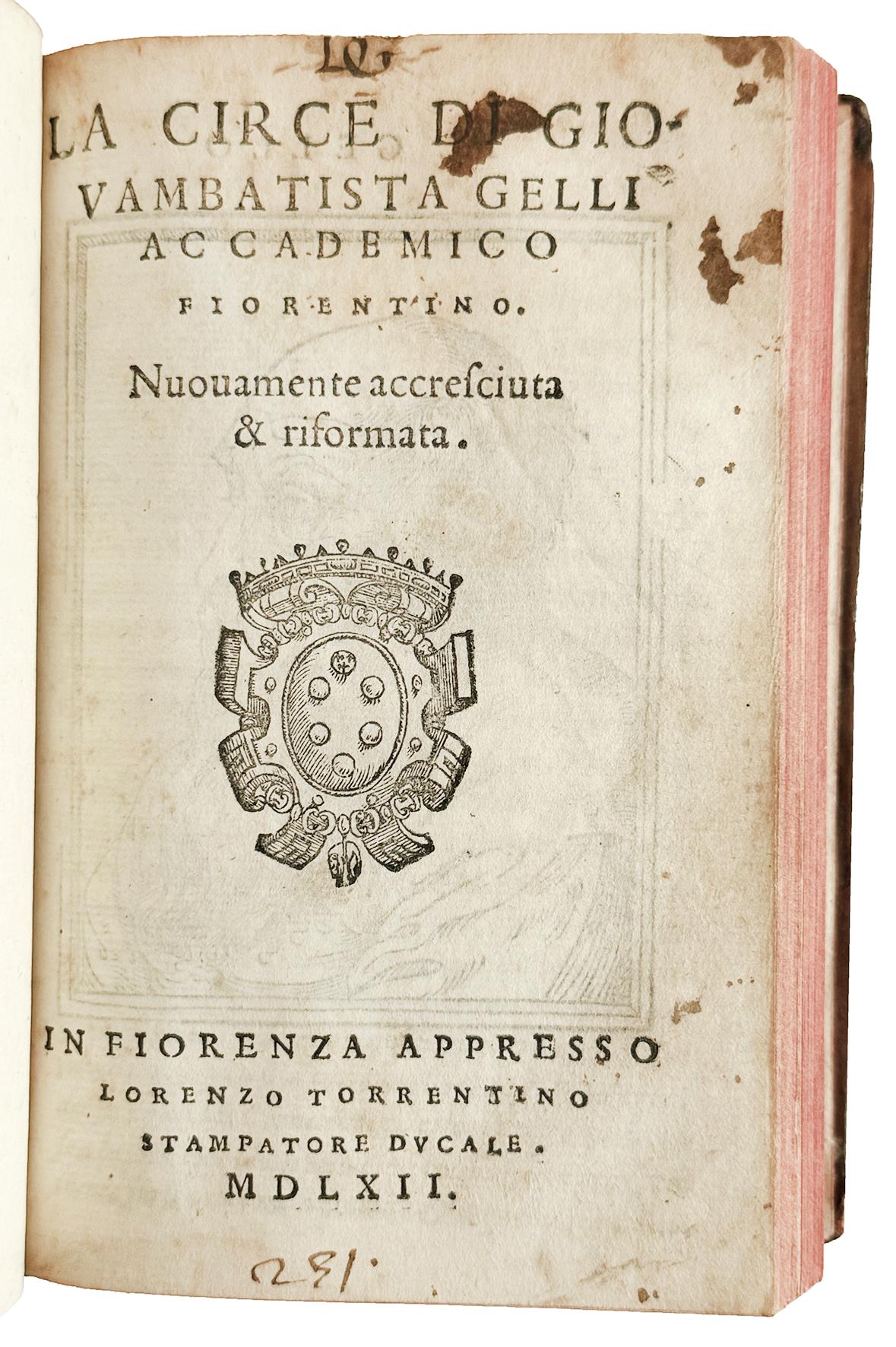
8vo. [68] leaves. Collation: A-H8 I4. The last leaf is a blank. Woodcut portrait of the author on the title page.
_x000D_Rare early edition. The Ragionamento nel quale Pietro Aretino figura quattro suoi amici, che favellano delle corti del mondo, e di quella del cielo, also know as “Ragionamento delle Corti”, which was first published by Francesco Marcolini in 1538, is related for style and satirical intent to the famous Aretino's erotic Ragionamenti or Dialoghi featuring the characters of Nanna, Antonia, and Pippa and printed between 1534 and 1536. The work subsequently underwent at least six reprints, including the present edition, all of which are extremely rare, before being included in the London-based typographer John Wolf 1584 collected edition of all Aretino's Ragionamenti.
_x000D_In the present Ragionamento, Aretino “completely overturns Castiglionès utopia, condemning the figure of the intellectual-courtier, who is no longer the enlightened advisor to a prince who embodies all virtues, but an individual devoted to intrigue, lies, and the constant pursuit of personal gain [...] The court is described as a terrible place, where vice and corruption reign under the constant threat of violence. At court (so declares one of the characters in the Ragionamento), one lives in familiarity with death. The reversal is completed when, in the Ragionamenti, Aretino replaces the discussion of the qualities of the perfect courtier with those of the perfect prostitute, as if the two figures mirrored each other” (G. Montinaro, L'utopia rovesciata di Aretino, in: “Biblioteca di via Senato”, IV, 2011, p. 7).
_x000D_In the “Ragionamento delle Corti”, divided into two parts, the author presents some of his friends conversing in the famous Venice garden of the printer Francesco Marcolini, who was a close friend of Aretino and the editor of all of his works in the 1530s and 1540s. The interlocutors are Lodovico Dolce, Francesco Coccio and Pietro Piccardi in both parts, and Giovanni Giustiniani who appears only in the second.
_x000D_Pietro, the son of Tita Bonci and a cobbler named Luca Del Tura, was born in Arezzo in the momentous year 1492. With typical disregard for propriety, he sometimes claimed to be the bastard of the nobleman Luigi Bacci, who kept his mother as a mistress. In all his publications, however, he adopted the nom d'artiste Pietro Aretino. He received little education and lived, for some years poor and neglected, picking up such straps of information as he could. Still very young he was banished from Arezzo on account of a satirical sonnet which he composed against indulgences. About 1506 he moved to Perugia, where he obtained the protection of Francesco Bontempi. In that town he also got acquainted with many poets and painters, among them Agnolo Firenzuola, who became a partner in his many dissolute adventures. In those years he wrote a collection of poems, Opera nova (Venezia, Zoppino, 1512), his first published work. After a brief stay in Siena, where he was serving Agostino Chigi, he settled in Rome in 1517 and entered the refined court of Leo X. Like his friend Bernardo Accolti, called Unico Aretino, Pietro became soon very popular for his audacity and effrontery that made him both loved for the laugh and sympathy he communicated, and respected for fear of falling victim to his terrible satirical tongue. He was able to become the confidant of politicians and diplomats and close friend of artists and poets. From them he gathered a wealth of anecdotes and secrets, which he used to put himself at the center of Roman social life. Aretin
Leggi di più
Leggi di meno
Venditore:
Libreria Alberto Govi
Vedi tutti i prodotti
Informazioni:
<p>8vo. [68] leaves. Collation: A-H<sup>8</sup> I<sup>4</sup>. The last leaf is a blank. Woodcut portrait of the author on the title page.</p> <p>Rare early edition. The <em>Ragionamento nel quale Pietro Aretino figura quattro suoi amici, che favellano delle corti del mondo, e di quella del cielo</em>, also know as &ldquo;Ragionamento delle Corti&rdquo;, which was first published by Francesco Marcolini in 1538, is related for style and satirical intent to the famous Aretino's erotic <em>Ragionamenti</em> or <em>Dialoghi</em> featuring the characters of Nanna, Antonia, and Pippa and printed between 1534 and 1536. The work subsequently underwent at least six reprints, including the present edition, all of which are extremely rare, before being included in the London-based typographer John Wolf 1584 collected edition of all Aretino's <em>Ragionamenti</em>.</p> <p>In the present <em>Ragionamento</em>, Aretino &ldquo;completely overturns Castiglione's utopia, condemning the figure of the intellectual-courtier, who is no longer the enlightened advisor to a prince who embodies all virtues, but an individual devoted to intrigue, lies, and the constant pursuit of personal gain [...] The court is described as a terrible place, where vice and corruption reign under the constant threat of violence. At court (so declares one of the characters in the <em>Ragionamento</em>), one lives in familiarity with death. The reversal is completed when, in the <em>Ragionamenti</em>, Aretino replaces the discussion of the qualities of the perfect courtier with those of the perfect prostitute, as if the two figures mirrored each other&rdquo; (G. Montinaro, <em>L'utopia rovesciata di Aretino</em>, in: &ldquo;Biblioteca di via Senato&rdquo;, IV, 2011, p. 7).</p> <p>In the &ldquo;Ragionamento delle Corti&r
Immagini:
![Ragionamento nel quale Pietro Aretino figura quattro suoi amici. Che favellano de le corti del mondo, & di quella del cielo. N.pl., n. pr., n.d. [not before 1538]](https://www.ibs.it/images/2570270144608_921920200_1_0_0_75.jpg)
- Prodotto usato
- Condizioni: Usato - Condizione accettabile
EAN:
2570270144608

L'articolo è stato aggiunto al carrello
Informazioni e Contatti sulla Sicurezza dei Prodotti
Le schede prodotto sono aggiornate in conformità al Regolamento UE 988/2023. Laddove ci fossero taluni dati non disponibili per ragioni indipendenti da IBS, vi informiamo che stiamo compiendo ogni ragionevole sforzo per inserirli. Vi invitiamo a controllare periodicamente il sito www.ibs.it per eventuali novità e aggiornamenti.
Per le vendite di prodotti da terze parti, ciascun venditore si assume la piena e diretta responsabilità per la commercializzazione del prodotto e per la sua conformità al Regolamento UE 988/2023, nonché alle normative nazionali ed europee vigenti.
Per informazioni sulla sicurezza dei prodotti, contattare productsafetyibs@feltrinelli.it
L’articolo è stato aggiunto alla lista dei desideri
