

L’articolo è stato aggiunto alla lista dei desideri






LIBRO INGLESE
 E-mail
 Facebook
 LinkedIn
 Twitter
 WhatsApp
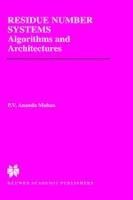
Residue Number Systems: Algorithms and Architectures
(0)
Cliccando su “Conferma” dichiari che il contenuto da te inserito è conforme alle Condizioni Generali d’Uso del Sito ed alle Linee Guida sui Contenuti Vietati. Puoi rileggere e modificare e successivamente confermare il tuo contenuto. Tra poche ore lo troverai online (in caso contrario verifica la conformità del contenuto alle policy del Sito).
Grazie per la tua recensione!
Tra poche ore la vedrai online (in caso contrario verifica la conformità del testo alle nostre linee guida). Dopo la pubblicazione per te +4 punti 
132,10 €

Venditore: IBS
Articolo acquistabile con Carta del Docente

Articolo acquistabile con Carta Cultura Giovani e Carta del Merito

Articolo acquistabile con Carta della Cultura

Paga con Klarna in 3 rate senza interessi per ordini superiori a 39 €

Dati e Statistiche
 Salvato in 0 liste dei desideri
Salvato in 0 liste dei desideri
Residue Number Systems: Algorithms and Architectures
Disponibilità in 2 settimane
132,10 €
132,10 €
Disponibilità in 2 settimane
Altre offerte vendute e spedite dai nostri venditori
Libri in Inglese
Residue Number Systems: Algorithms and Architectures
Altri venditori
Prezzo e spese di spedizione

LIBRO INGLESE
Disponibilità in 2 settimane

Venduto e spedito da
IBS
Spedizione Gratis
132,10 €
Altri venditori
Prezzo e spese di spedizione
LIBRO INGLESE
Disponibilità in 2 settimane
Venduto e spedito da
IBS
Spedizione Gratis
132,10 €
Altri venditori
Prezzo e spese di spedizione

Tutti i formati ed edizioni
Promo attive (0)
There has been continuing interest in the improvement of the speed of Digital Signal processing. The use of Residue Number Systems for the design of DSP systems has been extensively researched in literature. Szabo and Tanaka have popularized this approach through their book published in 1967. Subsequently, Jenkins and Leon have rekindled the interest of researchers in this area in 1978, from which time there have been several efforts to use RNS in practical system implementation. An IEEE Press book has been published in 1986 which was a collection of Papers. It is very interesting to note that in the recent past since 1988, the research activity has received a new thrust with emphasis on VLSI design using non ROM based designs as well as ROM based designs as evidenced by the increased publications in this area. The main advantage in using RNS is that several small word-length Processors are used to perform operations such as addition, multiplication and accumulation, subtraction, thus needing less instruction execution time than that needed in conventional 16 bitl32 bit DSPs. However, the disadvantages of RNS have b. een the difficulty of detection of overflow, sign detection, comparison of two numbers, scaling, and division by arbitrary number, RNS to Binary conversion and Binary to RNS conversion. These operations, unfortunately, are computationally intensive and are time consuming.
Leggi di più
Leggi di meno
Autore:
Editore:
Collana:
The Springer International Series in Engineering and Computer Science
Anno:
2002
Rilegatura:
Hardback
Pagine:
253 p.
Testo in English
Dimensioni:
235 x 155 mm
EAN:
9781402070310

L'articolo è stato aggiunto al carrello
Informazioni e Contatti sulla Sicurezza dei Prodotti
Le schede prodotto sono aggiornate in conformità al Regolamento UE 988/2023. Laddove ci fossero taluni dati non disponibili per ragioni indipendenti da IBS, vi informiamo che stiamo compiendo ogni ragionevole sforzo per inserirli. Vi invitiamo a controllare periodicamente il sito www.ibs.it per eventuali novità e aggiornamenti.
Per le vendite di prodotti da terze parti, ciascun venditore si assume la piena e diretta responsabilità per la commercializzazione del prodotto e per la sua conformità al Regolamento UE 988/2023, nonché alle normative nazionali ed europee vigenti.
Per informazioni sulla sicurezza dei prodotti, contattare productsafetyibs@feltrinelli.it
L’articolo è stato aggiunto alla lista dei desideri
