

L’articolo è stato aggiunto alla lista dei desideri








LIBRO INGLESE
 E-mail
 Facebook
 LinkedIn
 Twitter
 WhatsApp
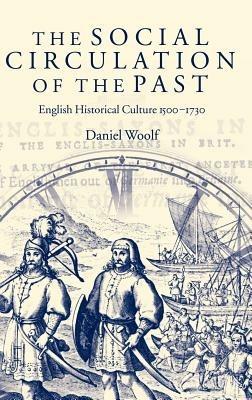
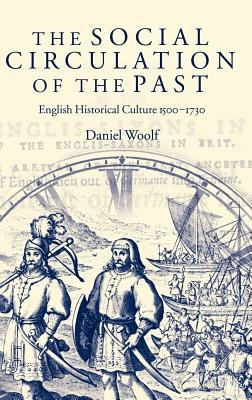
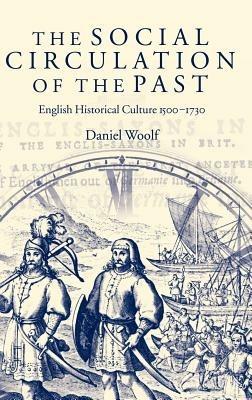
The Social Circulation of the Past: English Historical Culture 1500-1730
(0)
Cliccando su “Conferma” dichiari che il contenuto da te inserito è conforme alle Condizioni Generali d’Uso del Sito ed alle Linee Guida sui Contenuti Vietati. Puoi rileggere e modificare e successivamente confermare il tuo contenuto. Tra poche ore lo troverai online (in caso contrario verifica la conformità del contenuto alle policy del Sito).
Grazie per la tua recensione!
Tra poche ore la vedrai online (in caso contrario verifica la conformità del testo alle nostre linee guida). Dopo la pubblicazione per te +4 punti 
347,20 €
+3470
punti 

Venditore: IBS
Articolo acquistabile con Carta del Docente

Articolo acquistabile con Carta Cultura Giovani e Carta del Merito

Paga con Klarna in 3 rate senza interessi per ordini superiori a 39 €

Dati e Statistiche
 Salvato in 0 liste dei desideri
Salvato in 0 liste dei desideri
The Social Circulation of the Past: English Historical Culture 1500-1730
Disponibilità in 2 settimane
347,20 €
347,20 €
Disponibilità in 2 settimane
Altre offerte vendute e spedite dai nostri venditori

Libri in Inglese
The Social Circulation of the Past: English Historical Culture 1500-1730
Altri venditori
Prezzo e spese di spedizione
Nuovo
 disponibilità in 2 settimane
 Venduto e spedito da
IBS
Venduto e spedito da
IBS
disponibilità in 2 settimane
Spedizione Gratis
347,20 €
Altri venditori
Prezzo e spese di spedizione
Nuovo
disponibilità in 2 settimane
Venduto e spedito da
IBS
disponibilità in 2 settimane
Spedizione Gratis
347,20 €
Altri venditori
Prezzo e spese di spedizione

Tutti i formati ed edizioni
Promo attive (1)
This book investigates the changing historical culture in England between the beginning of the sixteenth century and the early eighteenth century. Based on a wide variety of manuscript and printed sources from local and central repositories, it focuses on the social framework within which historical knowledge was generated, modified, and preserved, rather than on historiography or historical method. Woolf begins his study by examining the ways in which early modern people acclimatized themselves to accelerating changes in their physical, social, religious, and economic environments. A developing, if uneasy, accommodation to change went hand in hand with shifting attitudes to the acceptability of novelty and innovation. The family was the central social unit throughout most of this time, and Woolf examines views of ancestry and heredity with a particular emphasis on the circulation of genealogical knowledge and its status relative to other forms of knowledge about the past. The third part of the book turns to the subject of antiquarianism, investigating the relationship between the many varieties of antiquarian activitiy which focused on a visible and tangible past, and the emergence of a visual sense of history during the seventeenth century. It is argued that artefacts ranging from fossils to funeral urns were exchanged in an 'archaeological economy' among local discoverers of antiquities, most of whom were of humble station, local gentry and clergy, and university- or London-based antiquaries. It is through the force and volume of this type of exchange, rather than the scholarly contributions of particular authors, that England became much more historically aware by the early eighteenth century. The fourth and final part takes this line of argument in a different direction, analysing the study of recollections and memories of the past. Beginning with an examination of the place of memory in English life generally, Woolf argues that memory as a faculty existed in tension with writing (for instance, with the emergence of a much more record-orientated local archival system). The growing quantity of published historical material had considerable impact on community memories of the past, threatening to overwhelm the latter with an emerging national 'master-narrative' of history. At the same time, local communities managed to preserve a rich variety of beliefs about their surroundings, beliefs that testify to the strength of connection betwen oral and literate expression, and popular and élite cutltures. However, oral modes of transmission, highly attractive to early Tudor antiquaries, were regarded with suspicion by early seventeenth-century scholars because of their vagueness and undocumentability. This scepticism was complemented by a deepening social hostility toward 'vulgar error' and the lower orders with which much of it was - not always correctly - associated. By the early eighteenth century, oral tradition was no longer a legitimate tool of the anitquary or the historian, though certain scholars began to preserve it as folklore, in which form it would be studied anew in the nineteenth and twentieth centuries. In conclusion, Woolf argues that sweeping changes in the perception of the past and the understanding of its place in social life occurred during this period, producing a historical culture which was qualitatively different from that which had existed at the end of the fifteenth century. It is against this culture that the formal historical writing of the age must be understood and it is from it that eighteenth- and nineteenth-century historical writing, as well as related genres such as the historical novel, would emerge.
Leggi di più
Leggi di meno
Autore:
Editore:
Anno:
2003
Rilegatura:
Hardback
Pagine:
440 p.
Testo in English
Dimensioni:
241 x 161 mm
Peso:
900 gr.
EAN:
9780199257782
L'articolo è stato aggiunto al carrello
Informazioni e Contatti sulla Sicurezza dei Prodotti
Le schede prodotto sono aggiornate in conformità al Regolamento UE 988/2023. Laddove ci fossero taluni dati non disponibili per ragioni indipendenti da IBS, vi informiamo che stiamo compiendo ogni ragionevole sforzo per inserirli. Vi invitiamo a controllare periodicamente il sito www.ibs.it per eventuali novità e aggiornamenti.
Per le vendite di prodotti da terze parti, ciascun venditore si assume la piena e diretta responsabilità per la commercializzazione del prodotto e per la sua conformità al Regolamento UE 988/2023, nonché alle normative nazionali ed europee vigenti.
Per informazioni sulla sicurezza dei prodotti, contattare productsafetyibs@feltrinelli.it
L’articolo è stato aggiunto alla lista dei desideri
