

L’articolo è stato aggiunto alla lista dei desideri








LIBRO VINTAGE
 E-mail
 Facebook
 LinkedIn
 Twitter
 WhatsApp
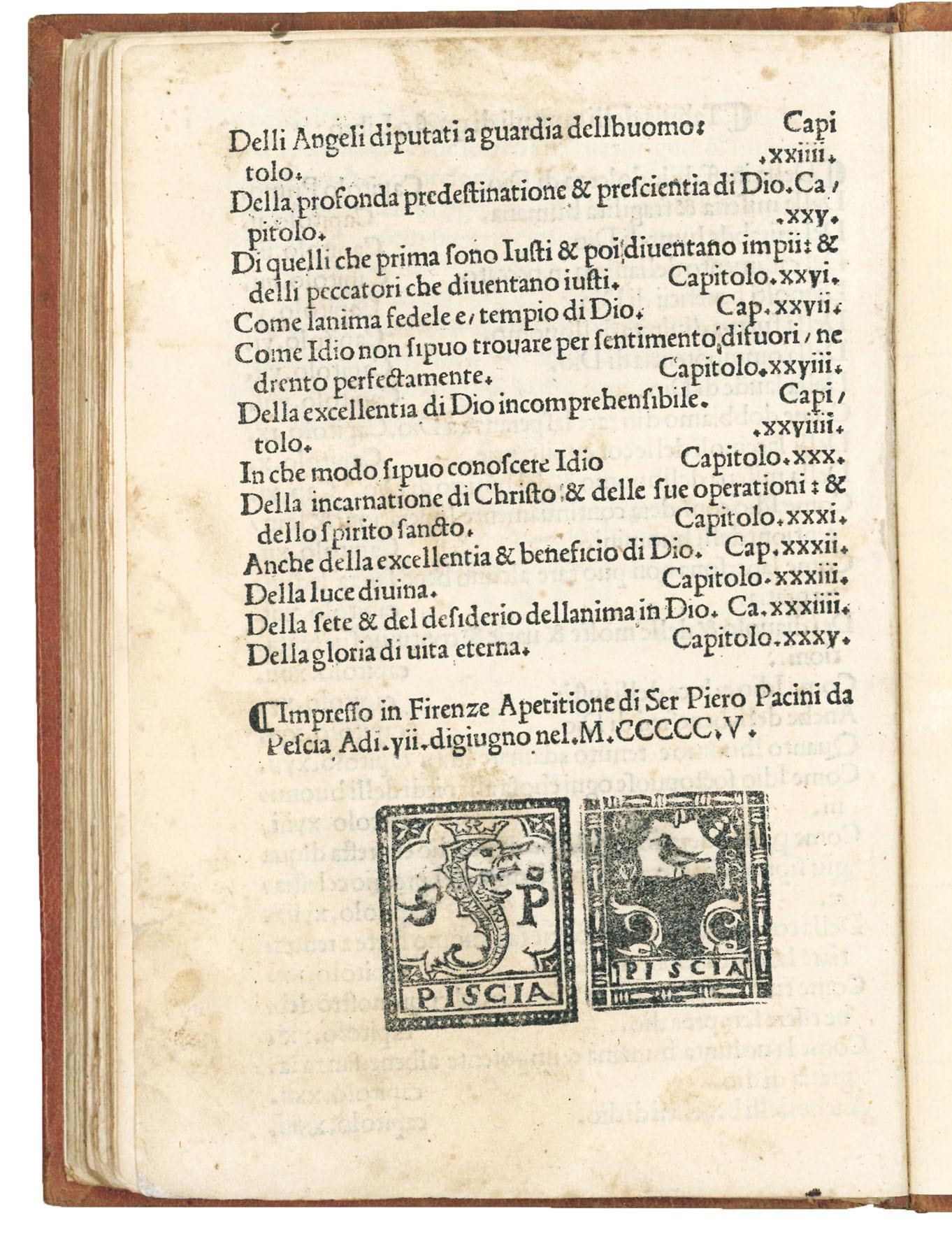
Soliloquii del Divo Padre Sancto Augustino volgari. Colophon: Impresso in Firenze Apetitione di Ser Piero Pacini da Pescia Adi. vii. digiugno nel. M.CCCCC.V
(0)
Cliccando su “Conferma” dichiari che il contenuto da te inserito è conforme alle Condizioni Generali d’Uso del Sito ed alle Linee Guida sui Contenuti Vietati. Puoi rileggere e modificare e successivamente confermare il tuo contenuto. Tra poche ore lo troverai online (in caso contrario verifica la conformità del contenuto alle policy del Sito).
Grazie per la tua recensione!
Tra poche ore la vedrai online (in caso contrario verifica la conformità del testo alle nostre linee guida). Dopo la pubblicazione per te +4 punti 
Dati e Statistiche
 Salvato in 0 liste dei desideri
Salvato in 0 liste dei desideri
Soliloquii del Divo Padre Sancto Augustino volgari. Colophon: Impresso in Firenze Apetitione di Ser Piero Pacini da Pescia Adi. vii. digiugno nel. M.CCCCC.V
Disponibilità immediata
1.900,00 €
1.900,00 €
Disp. immediata
Altre offerte vendute e spedite dai nostri venditori
Libri Vintage
Soliloquii del Divo Padre Sancto Augustino volgari. Colophon: Impresso in Firenze Apetitione di Ser Piero Pacini da Pescia Adi. vii. digiugno nel. M.CCCCC.V
Altri venditori
Prezzo e spese di spedizione
Usato - In buone condizioni
 disponibilità immediata
 Venduto e spedito da
Libreria Alberto Govi
Venduto e spedito da
Libreria Alberto Govi
 5/
5
(2 opinioni)
5/
5
(2 opinioni)
disponibilità immediata
5/
5
(2 opinioni)
Spedizione 5,00 €
1.900,00 €
Altri venditori
Prezzo e spese di spedizione
Altri venditori
Prezzo e spese di spedizione
Usato - In buone condizioni
disponibilità immediata
Venduto e spedito da
Libreria Alberto Govi
5/
5
(2 opinioni)
disponibilità immediata
5/
5
(2 opinioni)
Spedizione 5,00 €
1.900,00 €

Tutti i formati ed edizioni
Promo attive (0)
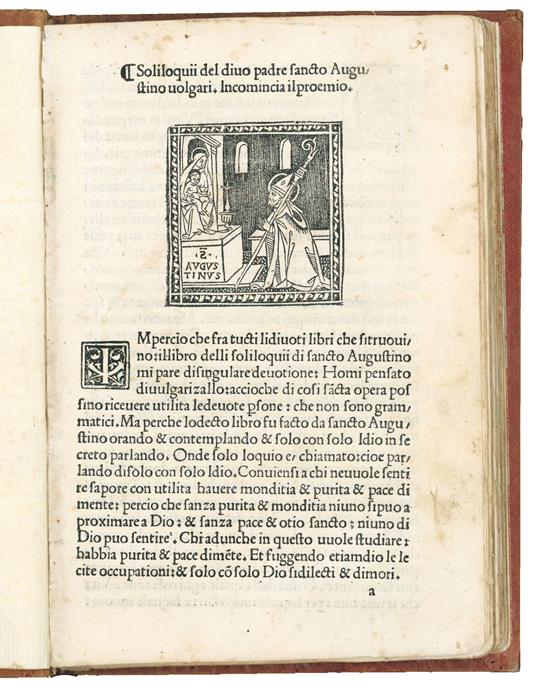
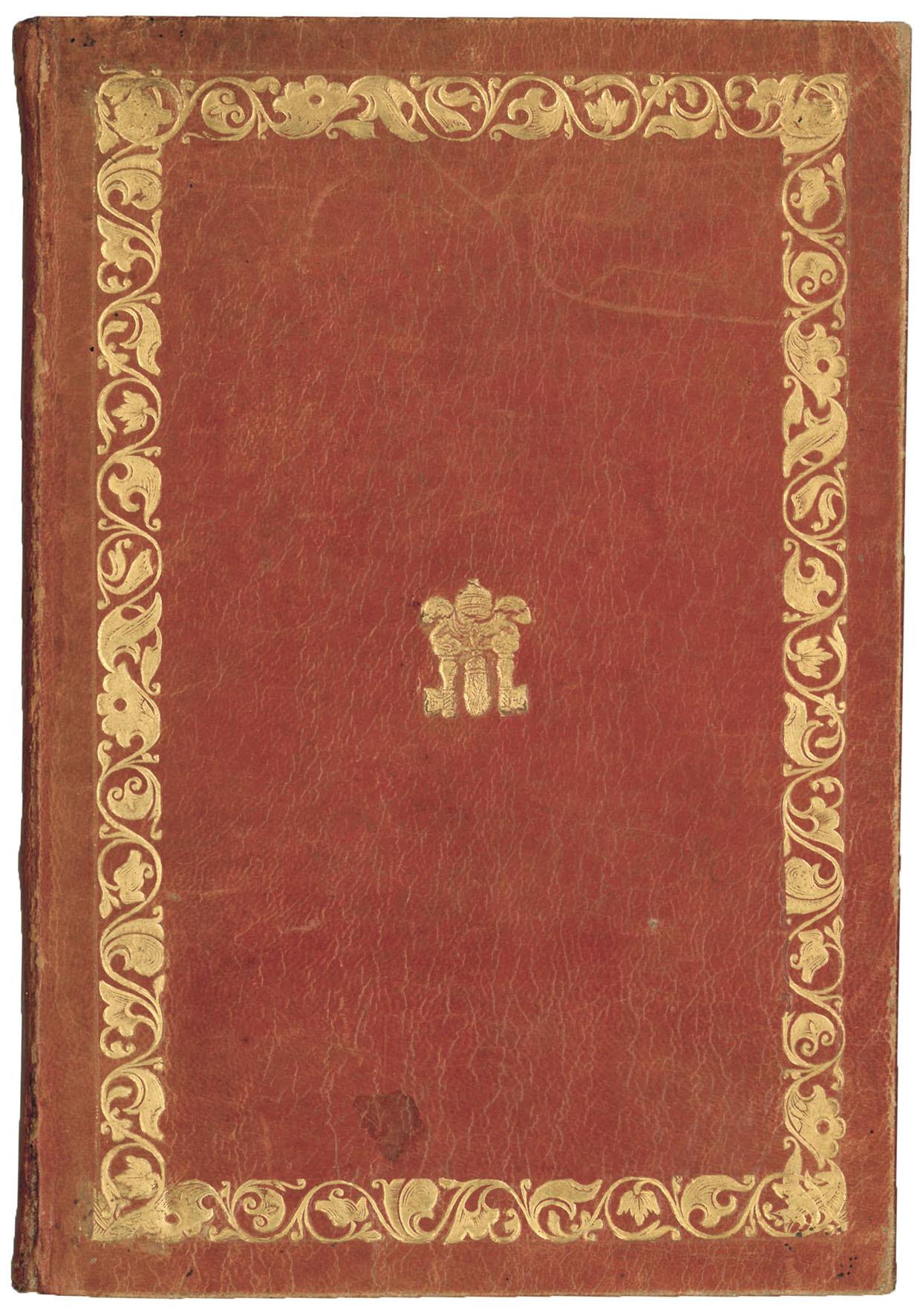
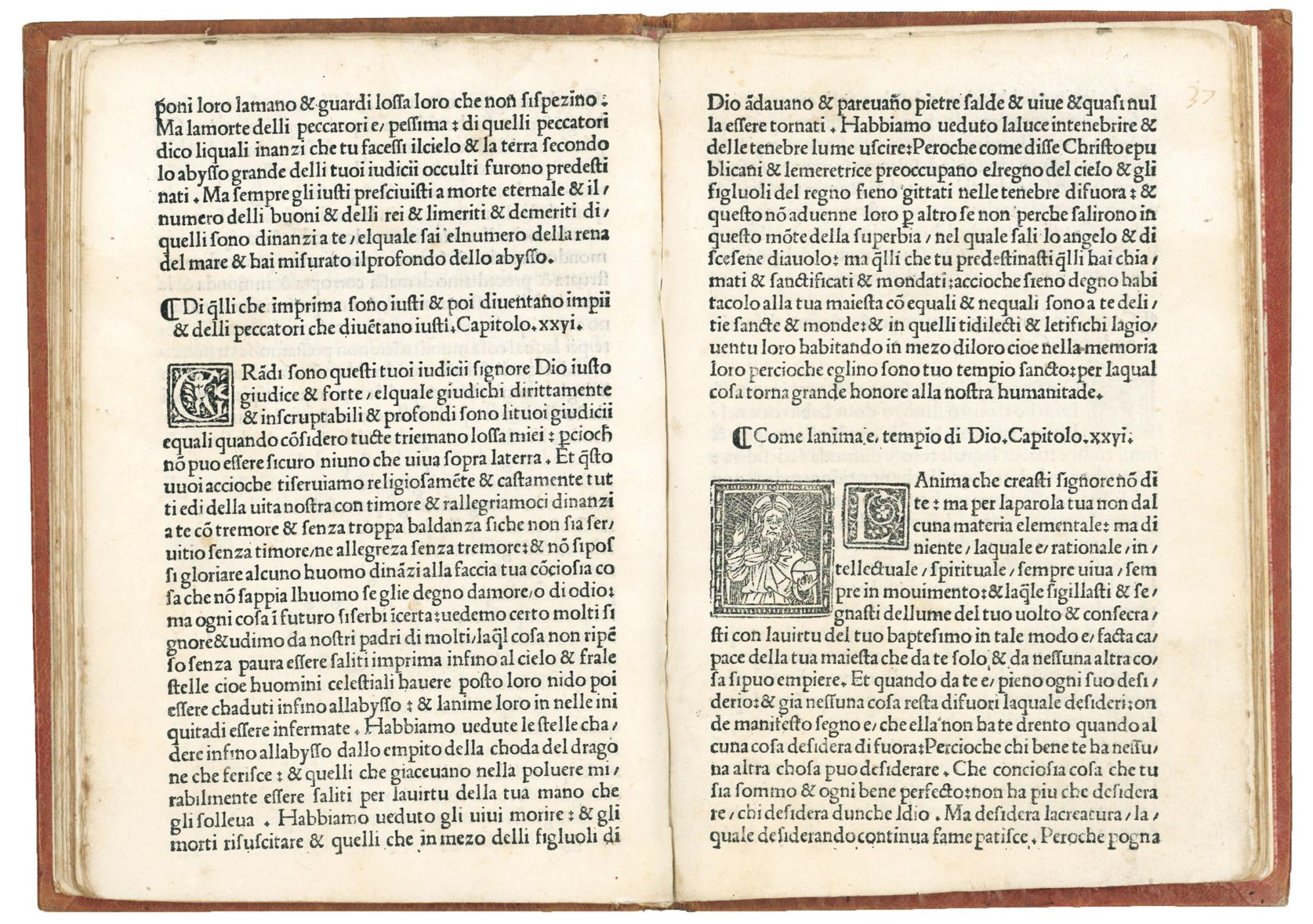
4to (194x132 mm). [34] leaves. Collation: a-c8 d6 e4. Woodcut vignette of St Augustine kneeling before the Virgin and Child on a throne on l. a1r. Colophon and double Pacinìs woodcut device on last leaf verso. Woodcut decorative initials on black ground. Roman type. Decorative 19th-century binding in orange calf with gilt roll-border on covers and small papal device at the center, color paper endleaves (slightly worn and rubbed). Small marginal hole to l. a6 not affecting the text, some occasional minor foxing, all in all a good copy.
Rare early Florence edition, a reprint of the 1496 Pacini edition, of this Italian translation of the apocryphal Soliloquia, a dialogue which describes St Augustinès state of mind between his conversion and baptism, containing a discussion of wisdom and the immortality of truth. In the later Middle Ages, Augustinès original text of the Soliloquia (‘Discourses on God and the immortality of the soul') was virtually forgotten, and in its place a different and more mystical pseudo-Augustinian Soliloquia, composed in the thirteenth century, in the form of a confession, began to gain popularity. Of all St Augustinès apocryphal texts, this one was the most successful in Italy and in France. The Soliloquia was translated into Italian three times in the fourteenth and fifteenth centuries and, although the translation remains anonymous, it is traditionally attributed to Fra Agostino da Scarperia, and it was certainly made in an Augustinian milieu.
Edit 16, CNCE27760; Sander, 697; J.P. Migne, ed., Patrologiae cursus completus, series latina, Paris, 1861, vol. 40, col. 863; S. Periti, Contributo alla bibliografia fiorentina del 16. secolo: le edizioni dal 1501 al 1530, Udine, 2004, S37; P. Kristeller, Early Florentine Woodcuts, London, 1897, 10c.
Leggi di più
Leggi di meno
Venditore:

Libreria Alberto Govi
Vedi tutti i prodotti
Informazioni:
<p>4to (194x132 mm). [34] leaves. Collation: a-c<sup>8</sup> d<sup>6</sup> e<sup>4</sup>. Woodcut vignette of St Augustine kneeling before the Virgin and Child on a throne on l. a1r. <em>Colophon</em> and double Pacini's woodcut device on last leaf verso. Woodcut decorative initials on black ground. Roman type. Decorative 19<sup>th</sup>-century binding in orange calf with gilt roll-border on covers and small papal device at the center, color paper endleaves (slightly worn and rubbed). Small marginal hole to l. a6 not affecting the text, some occasional minor foxing, all in all a good copy.</p> <p>Rare early Florence edition, a reprint of the 1496 Pacini edition, of this Italian translation of the apocryphal <em>Soliloquia</em>, a dialogue which describes St Augustine's state of mind between his conversion and baptism, containing a discussion of wisdom and the immortality of truth. In the later Middle Ages, Augustine's original text of the <em>Soliloquia</em> (&lsquo;Discourses on God and the immortality of the soul') was virtually forgotten, and in its place a different and more mystical pseudo-Augustinian <em>Soliloquia</em>, composed in the thirteenth century, in the form of a confession, began to gain popularity. Of all St Augustine's apocryphal texts, this one was the most successful in Italy and in France. The <em>Soliloquia</em> was translated into Italian three times in the fourteenth and fifteenth centuries and, although the translation remains anonymous, it is traditionally attributed to Fra Agostino da Scarperia, and it was certainly made in an Augustinian milieu.</p> <p>Edit 16, CNCE27760; Sander, 697; J.P. Migne, ed., <em>Patrologiae cursus completus, series latina</em>, Paris, 1861, vol. 40, col. 863; S. Periti, <em>Contributo alla bibliografia fiorentina del 16. secolo: le edizioni dal 1501 al
Immagini:
Editore:
Tipologia:
- Prodotto usato
- Condizioni: Usato - In buone condizioni
EAN:
2570270141799
L'articolo è stato aggiunto al carrello
Informazioni e Contatti sulla Sicurezza dei Prodotti
Le schede prodotto sono aggiornate in conformità al Regolamento UE 988/2023. Laddove ci fossero taluni dati non disponibili per ragioni indipendenti da IBS, vi informiamo che stiamo compiendo ogni ragionevole sforzo per inserirli. Vi invitiamo a controllare periodicamente il sito www.ibs.it per eventuali novità e aggiornamenti.
Per le vendite di prodotti da terze parti, ciascun venditore si assume la piena e diretta responsabilità per la commercializzazione del prodotto e per la sua conformità al Regolamento UE 988/2023, nonché alle normative nazionali ed europee vigenti.
Per informazioni sulla sicurezza dei prodotti, contattare productsafetyibs@feltrinelli.it
L’articolo è stato aggiunto alla lista dei desideri
