

L’articolo è stato aggiunto alla lista dei desideri








LIBRO INGLESE
 E-mail
 Facebook
 LinkedIn
 Twitter
 WhatsApp
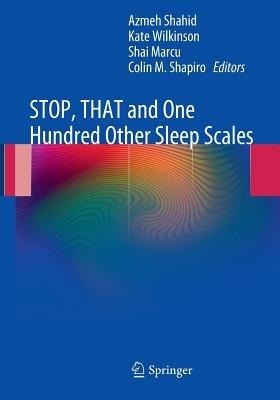
STOP, THAT and One Hundred Other Sleep Scales
(0)
Cliccando su “Conferma” dichiari che il contenuto da te inserito è conforme alle Condizioni Generali d’Uso del Sito ed alle Linee Guida sui Contenuti Vietati. Puoi rileggere e modificare e successivamente confermare il tuo contenuto. Tra poche ore lo troverai online (in caso contrario verifica la conformità del contenuto alle policy del Sito).
Grazie per la tua recensione!
Tra poche ore la vedrai online (in caso contrario verifica la conformità del testo alle nostre linee guida). Dopo la pubblicazione per te +4 punti 
145,50 €
+1460
punti 
Venditore: IBS
Articolo acquistabile con Carta del Docente

Articolo acquistabile con Carta Cultura Giovani e Carta del Merito

Articolo acquistabile con Carta della Cultura

Paga con Klarna in 3 rate senza interessi per ordini superiori a 39 €

Dati e Statistiche
 Salvato in 0 liste dei desideri
Salvato in 0 liste dei desideri
STOP, THAT and One Hundred Other Sleep Scales
Disponibilità in 2 settimane
145,50 €
145,50 €
Disponibilità in 2 settimane
Altre offerte vendute e spedite dai nostri venditori
Libri in Inglese
STOP, THAT and One Hundred Other Sleep Scales
Altri venditori
Prezzo e spese di spedizione
LIBRO INGLESE
Disponibilità in 2 settimane

Venduto e spedito da
IBS
Spedizione Gratis
145,50 €
Altri venditori
Prezzo e spese di spedizione
LIBRO INGLESE
Disponibilità in 2 settimane
Venduto e spedito da
IBS
Spedizione Gratis
145,50 €
Altri venditori
Prezzo e spese di spedizione

Tutti i formati ed edizioni
Promo attive (0)
There are at least four reasons why a sleep clinician should be familiar with rating scales that evaluate different facets of sleep. First, the use of scales facilitates a quick and accurate assessment of a complex clinical problem. In three or four minutes (the time to review ten standard scales), a clinician can come to a broad understanding of the patient in question. For example, a selection of scales might indicate that an individual is sleepy but not fatigued; lacking alertness with no insomnia; presenting with no symptoms of narcolepsy or restless legs but showing clear features of apnea; exhibiting depression and a history of significant alcohol problems. This information can be used to direct the consultation to those issues perceived as most relevant, and can even provide a springboard for explaining the benefits of certain treatment approaches or the potential corollaries of allowing the status quo to continue. Second, rating scales can provide a clinician with an enhanced vocabulary or language, improving his or her understanding of each patient. In the case of the sleep specialist, a scale can help him to distinguish fatigue from sleepiness in a patient, or elucidate the differences between sleepiness and alertness (which is not merely the inverse of the former). Sleep scales are developed by researchers and clinicians who have spent years in their field, carefully honing their preferred methods for assessing certain brain states or characteristic features of a condition. Thus, scales provide clinicians with a repertoire of questions, allowing them to draw upon the extensive experience of their colleagues when attempting to tease apart nuanced problems. Third, some scales are helpful for tracking a patient’s progress. A particular patient may not remember how alert he felt on a series of different stimulant medications. Scale assessments administered periodically over the course of treatment provide an objective record ofthe intervention, allowing the clinician to examine and possibly reassess her approach to the patient. Finally, for individuals conducting a double-blind crossover trial or a straightforward clinical practice audit, those who are interested in research will find that their own clinics become a source of great discovery. Scales provide standardized measures that allow colleagues across cities and countries to coordinate their practices. They enable the replication of previous studies and facilitate the organization and dissemination of new research in a way that is accessible and rapid. As the emphasis placed on evidence-based care grows, a clinician’s ability to assess his or her own practice and its relation to the wider medical community becomes invaluable. Scales make this kind of standardization possible, just as they enable the research efforts that help to formulate those standards. The majority of Rating Scales in Sleep and Sleep Disorders:100 Scales for Clinical Practice is devoted to briefly discussing individual scales. When possible, an example of the scale is provided so that readers may gain a sense of the instrument’s content. Groundbreaking and the first of its kind to conceptualize and organize the essential scales used in sleep medicine, Rating Scales in Sleep and Sleep Disorders:100 Scales for Clinical Practice is an invaluable resource for all clinicians and researchers interested in sleep disorders.
Leggi di più
Leggi di meno
Curatore:
Editore:
Anno:
2014
Rilegatura:
Paperback / softback
Pagine:
421 p.
Testo in English
Dimensioni:
254 x 178 mm
EAN:
9781493907755

L'articolo è stato aggiunto al carrello
Informazioni e Contatti sulla Sicurezza dei Prodotti
Le schede prodotto sono aggiornate in conformità al Regolamento UE 988/2023. Laddove ci fossero taluni dati non disponibili per ragioni indipendenti da IBS, vi informiamo che stiamo compiendo ogni ragionevole sforzo per inserirli. Vi invitiamo a controllare periodicamente il sito www.ibs.it per eventuali novità e aggiornamenti.
Per le vendite di prodotti da terze parti, ciascun venditore si assume la piena e diretta responsabilità per la commercializzazione del prodotto e per la sua conformità al Regolamento UE 988/2023, nonché alle normative nazionali ed europee vigenti.
Per informazioni sulla sicurezza dei prodotti, contattare productsafetyibs@feltrinelli.it
L’articolo è stato aggiunto alla lista dei desideri
