

L’articolo è stato aggiunto alla lista dei desideri









LIBRO INGLESE
 E-mail
 Facebook
 LinkedIn
 Twitter
 WhatsApp
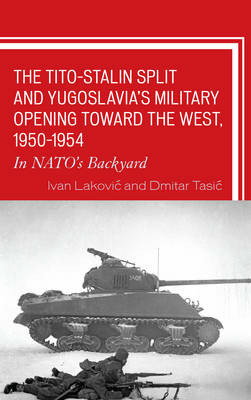
The Tito–Stalin Split and Yugoslavia's Military Opening toward the West, 1950–1954: In NATO's Backyard
(0)
Cliccando su “Conferma” dichiari che il contenuto da te inserito è conforme alle Condizioni Generali d’Uso del Sito ed alle Linee Guida sui Contenuti Vietati. Puoi rileggere e modificare e successivamente confermare il tuo contenuto. Tra poche ore lo troverai online (in caso contrario verifica la conformità del contenuto alle policy del Sito).
Grazie per la tua recensione!
Tra poche ore la vedrai online (in caso contrario verifica la conformità del testo alle nostre linee guida). Dopo la pubblicazione per te +4 punti 
168,50 €
+1690
punti 

Venditore: IBS
Articolo acquistabile con Carta del Docente

Articolo acquistabile con Carta Cultura Giovani e Carta del Merito

Paga con Klarna in 3 rate senza interessi per ordini superiori a 39 €

Dati e Statistiche
 Salvato in 0 liste dei desideri
Salvato in 0 liste dei desideri
The Tito–Stalin Split and Yugoslavia's Military Opening toward the West, 1950–1954: In NATO's Backyard
Disponibilità in 2 settimane
168,50 €
168,50 €
Disponibilità in 2 settimane
Altre offerte vendute e spedite dai nostri venditori

Libri in Inglese
The Tito–Stalin Split and Yugoslavia's Military Opening toward the West, 1950–1954: In NATO's Backyard
Altri venditori
Prezzo e spese di spedizione
Nuovo
 disponibilità in 2 settimane
 Venduto e spedito da
IBS
Venduto e spedito da
IBS
disponibilità in 2 settimane
Spedizione Gratis
168,50 €
Altri venditori
Prezzo e spese di spedizione
Nuovo
disponibilità in 2 settimane
Venduto e spedito da
IBS
disponibilità in 2 settimane
Spedizione Gratis
168,50 €
Altri venditori
Prezzo e spese di spedizione

Tutti i formati ed edizioni

Promo attive (1)
Yugoslav military cooperation with West emerged after the country’s split with the U.S.S.R. and its allies in 1948. It came as a surprise for many, since Yugoslavia used to be one of the staunchest followers of Soviet politics. However, faced with possible military escalation of the ideological, political, and economic worsening of relations with the East, the Yugoslav leadership quickly turned to their former “class enemies.” For the United States, it presented an opportunity to acquire many unexpected political benefits. Yugoslav alienation from the Kremlin provided territorial consolidation of the southern flank of NATO, denial of direct approach to the Adriatic Sea and Northern Italy to Soviet troops, and dealt a strong political blow to the homogeneity of the Eastern bloc. While not insisting on changing the ideological nature of Yugoslav state, the United States provided much needed material and financial aid, developing the base for entering into sphere of military cooperation. It had two main categories—direct support for Yugoslav forces through shipments of military equipment, as well as Yugoslavia entering into defensive, military alliance (the Balkan Pact) with Greece and Turkey, already full members of NATO. Such trends, aiming towards closer Yugoslav bonding with Western military and political structures, ended in the mid-1950s with Stalin’s death, the outbreak of the Trieste crisis, and Tito’s reconciliation with Soviet leadership. Developing the new policy of non-alignment with either of the confronting blocs, Yugoslavia stepped out from the program of Western military aid, while the Balkan Pact slowly faded in growing animosity between Greece and Turkey.
Leggi di più
Leggi di meno
Autore:
Editore:
Collana:
The Harvard Cold War Studies Book Series
Anno:
2016
Rilegatura:
Hardback
Pagine:
300 p.
Testo in English
Dimensioni:
233 x 160 mm
Peso:
626 gr.
EAN:
9781498539333
L'articolo è stato aggiunto al carrello
Informazioni e Contatti sulla Sicurezza dei Prodotti
Le schede prodotto sono aggiornate in conformità al Regolamento UE 988/2023. Laddove ci fossero taluni dati non disponibili per ragioni indipendenti da IBS, vi informiamo che stiamo compiendo ogni ragionevole sforzo per inserirli. Vi invitiamo a controllare periodicamente il sito www.ibs.it per eventuali novità e aggiornamenti.
Per le vendite di prodotti da terze parti, ciascun venditore si assume la piena e diretta responsabilità per la commercializzazione del prodotto e per la sua conformità al Regolamento UE 988/2023, nonché alle normative nazionali ed europee vigenti.
Per informazioni sulla sicurezza dei prodotti, contattare productsafetyibs@feltrinelli.it
L’articolo è stato aggiunto alla lista dei desideri
