

L’articolo è stato aggiunto alla lista dei desideri









EBOOK IN LINGUA STRANIERA
 E-mail
 Facebook
 LinkedIn
 Twitter
 WhatsApp
Understanding Jiddu Krishnamurti
(0)
Cliccando su “Conferma” dichiari che il contenuto da te inserito è conforme alle Condizioni Generali d’Uso del Sito ed alle Linee Guida sui Contenuti Vietati. Puoi rileggere e modificare e successivamente confermare il tuo contenuto. Tra poche ore lo troverai online (in caso contrario verifica la conformità del contenuto alle policy del Sito).
Grazie per la tua recensione!
Tra poche ore la vedrai online (in caso contrario verifica la conformità del testo alle nostre linee guida). Dopo la pubblicazione per te +4 punti 
8,49 €
+80
punti 
Venditore: IBS

Acquista online
Scaricabile subito
Articolo acquistabile con Carta del Docente

Articolo acquistabile con Carta Cultura Giovani e Carta del Merito

Articolo acquistabile con Carta della Cultura

Dati e Statistiche
 Salvato in 0 liste dei desideri
Salvato in 0 liste dei desideri
Understanding Jiddu Krishnamurti
Scaricabile subito
8,49 €
8,49 €
Scaricabile subito
Altre offerte vendute e spedite dai nostri venditori
Ebook in lingua straniera
Understanding Jiddu Krishnamurti
Altri venditori
Prezzo e spese di spedizione
Nuovo
Scaricabile subito

Venduto e spedito da
IBS
Spedizione Gratis
8,49 €
Altri venditori
Prezzo e spese di spedizione
Nuovo
Scaricabile subito
Venduto e spedito da
IBS
Spedizione Gratis
8,49 €
Altri venditori
Prezzo e spese di spedizione

Tutti i formati ed edizioni
Promo attive (0)
Understanding Jiddu Krishnamurti
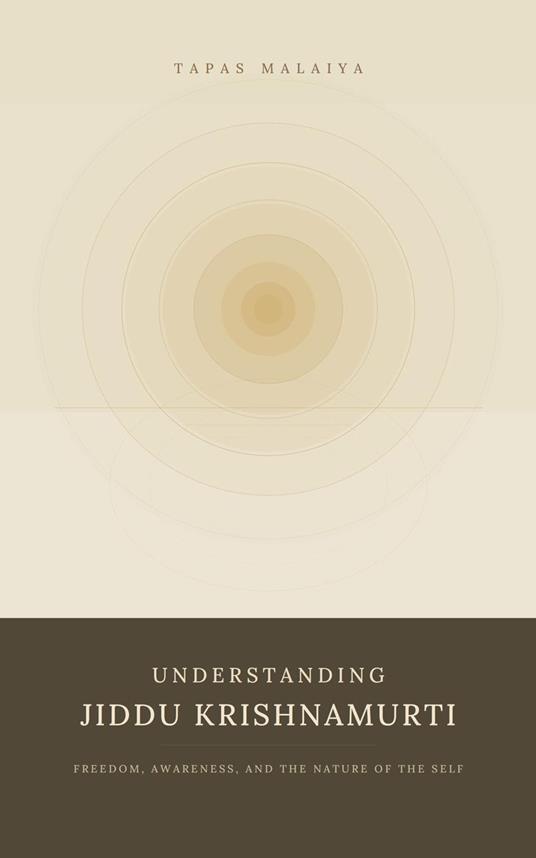
Jiddu Krishnamurti spent sixty years asking one question with extraordinary persistence: can the human mind free itself from its own conditioning — and if so, what is that freedom? He offered no method. No graduated path. No system the mind could adopt and carry around as a possession. He dissolved the worldwide organisation built around him, rejected every form of spiritual authority, and insisted — with great clarity and even greater tenderness — that truth cannot be handed from one person to another. For millions across the world, his words opened something no other teaching could reach. For many others — sincere, intelligent seekers — he remained impossibly difficult to grasp. This book bridges that gap. Understanding Jiddu Krishnamurti is a complete, accessible guide to one of the most radical spiritual thinkers of the twentieth century. Written for readers who sense that Krishnamurti is pointing at something essential but have struggled to follow where he leads, it approaches his teaching in a sequence that lets each idea arrive when the reader is ready for it. The book opens with his remarkable life story. A boy discovered at thirteen on a beach in South India, declared the coming World Teacher by the Theosophical Society, groomed for a role he never chose — and then, before three thousand devoted followers at Ommen in 1929, standing up and dissolving everything. The organisation, the prophecy, the entire edifice of spiritual authority that had been constructed around him. What followed was fifty-seven years of uninterrupted inquiry, conducted in talks, dialogues, and conversations across India, Europe, and the United States. From there, the book moves into the heart of his teaching. The structure of the conditioned mind — how culture, language, family, and psychology shape every dimension of inner life before we are old enough to question any of it. The nature of thought and psychological time — how the self perpetuates itself through the movement of becoming. Fear, desire, and attachment — explored not as abstract categories but as the living texture of actual experience. The observer and the observed — Krishnamurti's central insight, carefully unpacked and grounded in everyday life. Later chapters explore what becomes available when the structure of the self is genuinely understood. Choiceless awareness. Living without psychological effort. The nature of intelligence and insight. Love and relationship as a mirror of what we are. The question of death and the ending of the self. Meditation without method — a quality of mind rather than a practice. Beauty, nature, silence. And the radical, urgent question at the heart of everything Krishnamurti said: whether a total transformation of consciousness is possible, not gradually, but in the very act of seeing. The book closes with Krishnamurti's engagement with education — the schools he founded on three continents to embody a radically different understanding of what it means to learn. And with an invitation, offered quietly, to do with his words what he asked every audience he ever spoke to: not to accept them, not to reject them, but to look. This book is not a system. It does not claim to have captured what Krishnamurti was pointing at — no book can do that, and he would have been the first to say so. It is an attempt to point in the same direction he was pointing, using the understanding of twenty years of engagement with his work, in language that might be accessible to someone earlier in that journey. No method is offered here. Only an invitation to look. Perfect for readers of Krishnamurti, Ramana Maharshi, Nisargadatta Maharaj, Alan Watts, Eckhart Tolle, and anyone drawn to genuine inquiry into the nature of mind, freedom, and consciousness.
Leggi di più
Leggi di meno
Autore:
Anno edizione:
2026
Editore:
Formato:
Lingua:
Inglese
Compatibilità:
Tutti i dispositivi (eccetto Kindle) Scopri di più
Layout:
Reflowable
EAN:
9798904172299

L'articolo è stato aggiunto al carrello
Formato:
Gli eBook venduti da IBS.it sono in formato ePub e possono essere protetti da Adobe DRM. In caso di download di un file protetto da DRM si otterrà un file in formato .acs, (Adobe Content Server Message), che dovrà essere aperto tramite Adobe Digital Editions e autorizzato tramite un account Adobe, prima di poter essere letto su pc o trasferito su dispositivi compatibili.
Cloud:
Gli eBook venduti da IBS.it sono sincronizzati automaticamente su tutti i client di lettura Kobo successivamente all’acquisto. Grazie al Cloud Kobo i progressi di lettura, le note, le evidenziazioni vengono salvati e sincronizzati automaticamente su tutti i dispositivi e le APP di lettura Kobo utilizzati per la lettura.
Clicca qui per sapere come scaricare gli ebook utilizzando un pc con sistema operativo Windows
L’articolo è stato aggiunto alla lista dei desideri
