

L’articolo è stato aggiunto alla lista dei desideri









LIBRO INGLESE
 E-mail
 Facebook
 LinkedIn
 Twitter
 WhatsApp
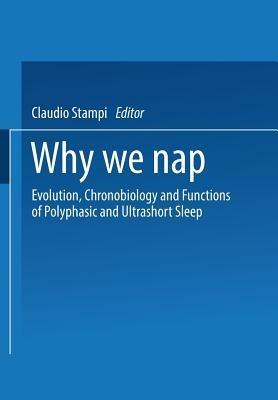
Why We Nap: Evolution, Chronobiology, and Functions of Polyphasic and Ultrashort Sleep
(0)
Cliccando su “Conferma” dichiari che il contenuto da te inserito è conforme alle Condizioni Generali d’Uso del Sito ed alle Linee Guida sui Contenuti Vietati. Puoi rileggere e modificare e successivamente confermare il tuo contenuto. Tra poche ore lo troverai online (in caso contrario verifica la conformità del contenuto alle policy del Sito).
Grazie per la tua recensione!
Tra poche ore la vedrai online (in caso contrario verifica la conformità del testo alle nostre linee guida). Dopo la pubblicazione per te +4 punti 
124,90 €
+1250
punti 
Venditore: IBS
Articolo acquistabile con Carta del Docente

Articolo acquistabile con Carta Cultura Giovani e Carta del Merito

Articolo acquistabile con Carta della Cultura

Paga con Klarna in 3 rate senza interessi per ordini superiori a 39 €

Dati e Statistiche
 Salvato in 0 liste dei desideri
Salvato in 0 liste dei desideri
Why We Nap: Evolution, Chronobiology, and Functions of Polyphasic and Ultrashort Sleep
Disponibilità in 2 settimane
124,90 €
124,90 €
Disponibilità in 2 settimane
Altre offerte vendute e spedite dai nostri venditori

Libri in Inglese
Why We Nap: Evolution, Chronobiology, and Functions of Polyphasic and Ultrashort Sleep
Altri venditori
Prezzo e spese di spedizione

LIBRO INGLESE
Disponibilità in 2 settimane

Venduto e spedito da
IBS
Spedizione Gratis
124,90 €
Altri venditori
Prezzo e spese di spedizione
LIBRO INGLESE
Disponibilità in 2 settimane
Venduto e spedito da
IBS
Spedizione Gratis
124,90 €
Altri venditori
Prezzo e spese di spedizione

Tutti i formati ed edizioni
Promo attive (0)
J ÜRGEN AscHOFF "Very bad habit! Very bad habit!" Captain Giles to Joseph Conrad who had taken a siesta. -Conrad: The Shadow Line On the Multiplicity of Rest-Activity Cycles: Some Historical and Conceptual Notes According to its title this book tries to answer the profound question of why we nap-and why Captain Giles was wrong in blaming Conrad for having napped. However, in this volume the term nap is not used in the narrower sense of an afternoon siesta; instead, emphasis is placed on the recurrent alternation between states of alertness and drowsiness, i. e. , on rest-activity cycles of high er frequency throughout the 24 hr. In view of this focus, two authors (Stampi, in Chapter I, and Ball, in Chapter 3) rightly refer to the psychologist Szymanski who was among the first to describe "polyphasic" activity patterns. Hence, I consider it appropriate to open this foreword with a few historical remarks. At the time when Szymanski (1920) made the distinction between "monophasic" and "polyphasic" rest-activity patterns and sleep-wake cy cles, respectively, not much was known about the mechanisms of such temporal structures. Although the botanists quite some time ago had demonstrated the endogenous nature of the "monophasic" sleep movements in plants, the hypothesis of an (still unknown) external driving force was favored by those who studied rhythms in animals and humans (Aschoff, 1990).
Leggi di più
Leggi di meno
Editore:
Anno:
2013
Rilegatura:
Paperback / softback
Pagine:
280 p.
Testo in English
Dimensioni:
244 x 170 mm
EAN:
9781475722123

L'articolo è stato aggiunto al carrello
Informazioni e Contatti sulla Sicurezza dei Prodotti
Le schede prodotto sono aggiornate in conformità al Regolamento UE 988/2023. Laddove ci fossero taluni dati non disponibili per ragioni indipendenti da IBS, vi informiamo che stiamo compiendo ogni ragionevole sforzo per inserirli. Vi invitiamo a controllare periodicamente il sito www.ibs.it per eventuali novità e aggiornamenti.
Per le vendite di prodotti da terze parti, ciascun venditore si assume la piena e diretta responsabilità per la commercializzazione del prodotto e per la sua conformità al Regolamento UE 988/2023, nonché alle normative nazionali ed europee vigenti.
Per informazioni sulla sicurezza dei prodotti, contattare productsafetyibs@feltrinelli.it
L’articolo è stato aggiunto alla lista dei desideri
