

L’articolo è stato aggiunto alla lista dei desideri








LIBRO INGLESE
 E-mail
 Facebook
 LinkedIn
 Twitter
 WhatsApp
The Works of John Ruskin
(0)
Cliccando su “Conferma” dichiari che il contenuto da te inserito è conforme alle Condizioni Generali d’Uso del Sito ed alle Linee Guida sui Contenuti Vietati. Puoi rileggere e modificare e successivamente confermare il tuo contenuto. Tra poche ore lo troverai online (in caso contrario verifica la conformità del contenuto alle policy del Sito).
Grazie per la tua recensione!
Tra poche ore la vedrai online (in caso contrario verifica la conformità del testo alle nostre linee guida). Dopo la pubblicazione per te +4 punti 
80,00 €
+800
punti 

Venditore: IBS
Articolo acquistabile con Carta del Docente

Articolo acquistabile con Carta Cultura Giovani e Carta del Merito

Paga con Klarna in 3 rate senza interessi per ordini superiori a 39 €

Dati e Statistiche
 Salvato in 0 liste dei desideri
Salvato in 0 liste dei desideri
The Works of John Ruskin
Disponibilità in 2 settimane
80,00 €
80,00 €
Disponibilità in 2 settimane
Altre offerte vendute e spedite dai nostri venditori
Libri in Inglese
The Works of John Ruskin
Altri venditori
Prezzo e spese di spedizione

Nuovo
 disponibilità in 2 settimane
 Venduto e spedito da
IBS
Venduto e spedito da
IBS
disponibilità in 2 settimane
Spedizione Gratis
80,00 €
Altri venditori
Prezzo e spese di spedizione
Nuovo
disponibilità in 2 settimane
Venduto e spedito da
IBS
disponibilità in 2 settimane
Spedizione Gratis
80,00 €
Altri venditori
Prezzo e spese di spedizione

Tutti i formati ed edizioni
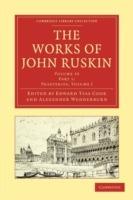
The influence of John Ruskin (1819-1900), both on his own time and on artistic and social developments in the twentieth century, cannot be over-stated. He changed Victorian perceptions of art, and was the main influence behind 'Gothic revival' architecture. As a social critic, he argued for the improvement of the condition of the poor, and against the increasing mechanisation of work in factories, which he believed was dull and soul-destroying. The thirty-nine volumes of the Library Edition of his works, published between 1903 and 1912, are themselves a remarkable achievement, in which his books and essays - almost all highly illustrated - are given a biographical and critical context in extended introductory essays and in the 'Minor Ruskiniana' - extracts from letters, articles and reminiscences both by and about Ruskin. This thirty-first volume contains the Bibliotheca pastorum.
Leggi di più
Leggi di meno
Autore:
Curatore:
Editore:
Collana:
Cambridge Library Collection - Works of John Ruskin
Anno:
2010
Rilegatura:
Paperback / softback
Pagine:
600 p.
Testo in English
Dimensioni:
230 x 155 mm
Peso:
930 gr.
EAN:
9781108008792

L'articolo è stato aggiunto al carrello
Informazioni e Contatti sulla Sicurezza dei Prodotti
Le schede prodotto sono aggiornate in conformità al Regolamento UE 988/2023. Laddove ci fossero taluni dati non disponibili per ragioni indipendenti da IBS, vi informiamo che stiamo compiendo ogni ragionevole sforzo per inserirli. Vi invitiamo a controllare periodicamente il sito www.ibs.it per eventuali novità e aggiornamenti.
Per le vendite di prodotti da terze parti, ciascun venditore si assume la piena e diretta responsabilità per la commercializzazione del prodotto e per la sua conformità al Regolamento UE 988/2023, nonché alle normative nazionali ed europee vigenti.
Per informazioni sulla sicurezza dei prodotti, contattare productsafetyibs@feltrinelli.it
L’articolo è stato aggiunto alla lista dei desideri
