

L’articolo è stato aggiunto alla lista dei desideri








LIBRO INGLESE
 E-mail
 Facebook
 LinkedIn
 Twitter
 WhatsApp
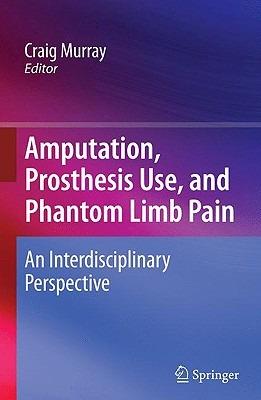
Amputation, Prosthesis Use, and Phantom Limb Pain: An Interdisciplinary Perspective
(0)
Cliccando su “Conferma” dichiari che il contenuto da te inserito è conforme alle Condizioni Generali d’Uso del Sito ed alle Linee Guida sui Contenuti Vietati. Puoi rileggere e modificare e successivamente confermare il tuo contenuto. Tra poche ore lo troverai online (in caso contrario verifica la conformità del contenuto alle policy del Sito).
Grazie per la tua recensione!
Tra poche ore la vedrai online (in caso contrario verifica la conformità del testo alle nostre linee guida). Dopo la pubblicazione per te +4 punti 

107,70 €
+1080
punti 
Venditore: IBS
Articolo acquistabile con Carta del Docente

Articolo acquistabile con Carta Cultura Giovani e Carta del Merito

Articolo acquistabile con Carta della Cultura

Paga con Klarna in 3 rate senza interessi per ordini superiori a 39 €

Dati e Statistiche
 Salvato in 0 liste dei desideri
Salvato in 0 liste dei desideri
Amputation, Prosthesis Use, and Phantom Limb Pain: An Interdisciplinary Perspective
Disponibilità in 2 settimane
107,70 €
107,70 €
Disponibilità in 2 settimane
Altre offerte vendute e spedite dai nostri venditori
Libri in Inglese
Amputation, Prosthesis Use, and Phantom Limb Pain: An Interdisciplinary Perspective
Altri venditori
Prezzo e spese di spedizione
Nuovo
Disponibilità in 2 settimane

Venduto e spedito da
IBS
Spedizione Gratis
107,70 €
Altri venditori
Prezzo e spese di spedizione
Nuovo
Disponibilità in 2 settimane
Venduto e spedito da
IBS
Spedizione Gratis
107,70 €
Altri venditori
Prezzo e spese di spedizione

Tutti i formati ed edizioni
Promo attive (1)
The main objective in the rehabilitation of people following amputation is to restore or improve their functioning, which includes their return to work. Full-time employment leads to beneficial health effects and being healthy leads to increased chances of full-time employment (Ross and Mirowskay 1995). Employment of disabled people enhances their self-esteem and reduces social isolation (Dougherty 1999). The importance of returning to work for people following amputation the- fore has to be considered. Perhaps the first article about reemployment and problems people may have at work after amputation was published in 1955 (Boynton 1955). In later years, there have been sporadic studies on this topic. Greater interest and more studies about returning to work and problems people have at work following amputation arose in the 1990s and has continued in recent years (Burger and Marinc ?ek 2007). These studies were conducted in different countries on all the five continents, the greatest number being carried out in Europe, mainly in the Netherlands and the UK (Burger and Marinc ?ek 2007). Owing to the different functions of our lower and upper limbs, people with lower limb amputations have different activity limitations and participation restrictions compared to people with upper limb amputations. Both have problems with driving and carrying objects. People with lower limb amputations also have problems standing, walking, running, kicking, turning and stamping, whereas people with upper limb amputations have problems grasping, lifting, pushing, pulling, writing, typing, and pounding (Giridhar et al. 2001).
Leggi di più
Leggi di meno
Pagine:
203 p.
Testo in English
Dimensioni:
235 x 155 mm
EAN:
9780387874616

L'articolo è stato aggiunto al carrello
Informazioni e Contatti sulla Sicurezza dei Prodotti
Le schede prodotto sono aggiornate in conformità al Regolamento UE 988/2023. Laddove ci fossero taluni dati non disponibili per ragioni indipendenti da IBS, vi informiamo che stiamo compiendo ogni ragionevole sforzo per inserirli. Vi invitiamo a controllare periodicamente il sito www.ibs.it per eventuali novità e aggiornamenti.
Per le vendite di prodotti da terze parti, ciascun venditore si assume la piena e diretta responsabilità per la commercializzazione del prodotto e per la sua conformità al Regolamento UE 988/2023, nonché alle normative nazionali ed europee vigenti.
Per informazioni sulla sicurezza dei prodotti, contattare productsafetyibs@feltrinelli.it
L’articolo è stato aggiunto alla lista dei desideri
