

L’articolo è stato aggiunto alla lista dei desideri








LIBRO INGLESE
 E-mail
 Facebook
 LinkedIn
 Twitter
 WhatsApp
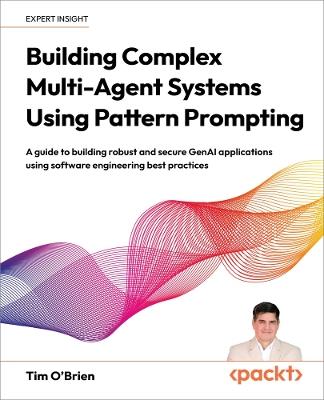
Building Complex Multi-Agent Systems Using Pattern Prompting: A guide to building robust and secure GenAI applications using software engineering best practices
(0)
Cliccando su “Conferma” dichiari che il contenuto da te inserito è conforme alle Condizioni Generali d’Uso del Sito ed alle Linee Guida sui Contenuti Vietati. Puoi rileggere e modificare e successivamente confermare il tuo contenuto. Tra poche ore lo troverai online (in caso contrario verifica la conformità del contenuto alle policy del Sito).
Grazie per la tua recensione!
Tra poche ore la vedrai online (in caso contrario verifica la conformità del testo alle nostre linee guida). Dopo la pubblicazione per te +4 punti 
35,52 €

-5%
37,39 €
+360
punti
Venditore: IBS
Articolo acquistabile con Carta del Docente

Articolo acquistabile con Carta Cultura Giovani e Carta del Merito

Articolo acquistabile con Carta della Cultura

Dati e Statistiche
 Salvato in 0 liste dei desideri
Salvato in 0 liste dei desideri
Building Complex Multi-Agent Systems Using Pattern Prompting: A guide to building robust and secure GenAI applications using software engineering best practices
Disponibilità in 3 settimane
35,52 €
-5%
37,39 €
35,52 €
37,39 €
-5%
Disponibilità in 3 settimane
Altre offerte vendute e spedite dai nostri venditori

Libri in Inglese
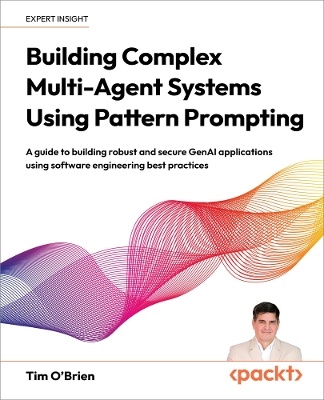
Building Complex Multi-Agent Systems Using Pattern Prompting: A guide to building robust and secure GenAI applications using software engineering best practices
Altri venditori
Prezzo e spese di spedizione
LIBRO INGLESE
Disponibilità in 3 settimane

Venduto e spedito da
IBS
Spedizione Gratis
-5%
37,39 €
35,52 €
Altri venditori
Prezzo e spese di spedizione
LIBRO INGLESE
Disponibilità in 3 settimane
Venduto e spedito da
IBS
Spedizione Gratis
-5%
37,39 €
35,52 €
Altri venditori
Prezzo e spese di spedizione

Tutti i formati ed edizioni
Promo attive (0)
Learn how to build GenAI applications using proven patterns and abstractions to work confidently across tools and frameworks Free with your book: DRM-free PDF version + access to Packt's next-gen Reader* Key Features Learn core abstractions and enterprise patterns behind modern GenAI systems Build secure, scalable agentic architectures using familiar engineering tools Generate multi-agent workflows and RabbitMQ-based GenAI configurations Use our Topologos prompt to easily build and test any agentic system Book DescriptionLearn how to build GenAI applications using proven software engineering patterns instead of rapidly changing frameworks. This book helps engineers build secure, scalable agentic systems with familiar tools and practical, engineer-to-engineer architectural guidance. You will connect GenAI concepts such as agentic workflows, embeddings, and vector databases to enterprise patterns, including components, adapters, and microarchitectures. Established GoF and enterprise design patterns help explain agentic behavior and system design, enabling you to reason about architecture rather than memorize tools. The book also shows you how to generate multi-agent and GenAI patterns as RabbitMQ configurations for scalable orchestration and communication. Using language-agnostic examples and widely used messaging, orchestration, and data technologies, you will build production-ready systems that integrate with existing infrastructure without unnecessary complexity. You will also use our Topologos prompt to build, modify, and test deploy-ready multi-agent systems quickly while improving robustness and maintainability. By the end of this book, you will be able to design reliable GenAI systems, make informed architectural decisions, and adapt confidently as tools and frameworks evolve. *Email sign-up and proof of purchase required What you will learn Build GenAI applications that are secure, reliable, and scalable Apply enterprise patterns to architect reliable GenAI systems Understand the core concepts behind LLMs needed for application development Use practical engineering approaches for agentic architecture design Generate RabbitMQ configurations for multi-agent GenAI systems Build and test robust multi-agent systems using our Topologos prompt Who this book is forThis book is written for experienced software engineers, architects, and technical leads who want to add GenAI to their toolbox without abandoning the engineering principles that define good software. It assumes familiarity with basic programming and software development, but does not require prior experience with AI, machine learning, RabbitMQ, or Airbyte. All necessary concepts and tools are introduced in contexts.
Leggi di più
Leggi di meno
Autore:
Editore:
Anno:
2026
Rilegatura:
Paperback / softback
Pagine:
310 p.
Testo in English
Dimensioni:
235 x 191 mm
EAN:
9781806114290


L'articolo è stato aggiunto al carrello
Informazioni e Contatti sulla Sicurezza dei Prodotti
Le schede prodotto sono aggiornate in conformità al Regolamento UE 988/2023. Laddove ci fossero taluni dati non disponibili per ragioni indipendenti da IBS, vi informiamo che stiamo compiendo ogni ragionevole sforzo per inserirli. Vi invitiamo a controllare periodicamente il sito www.ibs.it per eventuali novità e aggiornamenti.
Per le vendite di prodotti da terze parti, ciascun venditore si assume la piena e diretta responsabilità per la commercializzazione del prodotto e per la sua conformità al Regolamento UE 988/2023, nonché alle normative nazionali ed europee vigenti.
Per informazioni sulla sicurezza dei prodotti, contattare productsafetyibs@feltrinelli.it
L’articolo è stato aggiunto alla lista dei desideri
