

L’articolo è stato aggiunto alla lista dei desideri








LIBRO INGLESE
 E-mail
 Facebook
 LinkedIn
 Twitter
 WhatsApp
Identifying Potential for Equitable Access to Tertiary Level Science: Digging for Gold
(0)
Cliccando su “Conferma” dichiari che il contenuto da te inserito è conforme alle Condizioni Generali d’Uso del Sito ed alle Linee Guida sui Contenuti Vietati. Puoi rileggere e modificare e successivamente confermare il tuo contenuto. Tra poche ore lo troverai online (in caso contrario verifica la conformità del contenuto alle policy del Sito).
Grazie per la tua recensione!
Tra poche ore la vedrai online (in caso contrario verifica la conformità del testo alle nostre linee guida). Dopo la pubblicazione per te +4 punti 
137,60 €
+1380
punti 
Venditore: IBS
Articolo acquistabile con Carta del Docente

Articolo acquistabile con Carta Cultura Giovani e Carta del Merito

Articolo acquistabile con Carta della Cultura

Paga con Klarna in 3 rate senza interessi per ordini superiori a 39 €

Dati e Statistiche
 Salvato in 0 liste dei desideri
Salvato in 0 liste dei desideri
Identifying Potential for Equitable Access to Tertiary Level Science: Digging for Gold
Disponibilità in 2 settimane
137,60 €
137,60 €
Disponibilità in 2 settimane
Altre offerte vendute e spedite dai nostri venditori
Libri in Inglese
Identifying Potential for Equitable Access to Tertiary Level Science: Digging for Gold
Altri venditori
Prezzo e spese di spedizione
Nuovo
Disponibilità in 2 settimane

Venduto e spedito da
IBS
Spedizione Gratis
137,60 €
Altri venditori
Prezzo e spese di spedizione
Nuovo
Disponibilità in 2 settimane
Venduto e spedito da
IBS
Spedizione Gratis
137,60 €
Altri venditori
Prezzo e spese di spedizione

Tutti i formati ed edizioni
Promo attive (0)
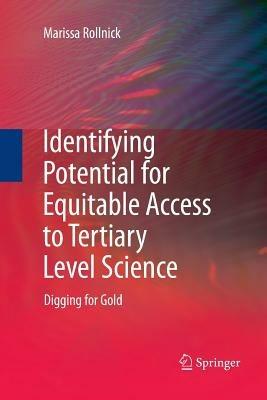
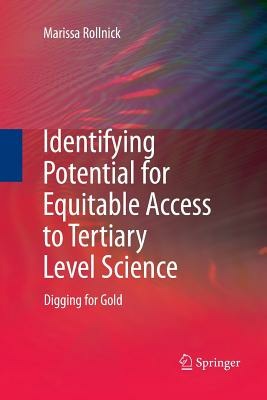
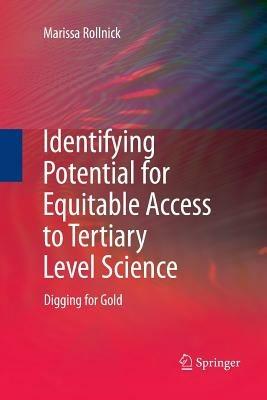
Higher education internationally is in a state of transition and transformation, leading to an increase in the level of participation, and a consequent increase in number of non traditional and underprepared students. The appearance of these students provides a particular challenge in the sciences where adequate grounding is crucial. One response to this challenge has been the provision of access, foundation or "second chance programmes" which operate on different models internationally. In South Africa, where the push for equity is strong in the wake of the apartheid era, programmes have generally been established at all tertiary institutions with some of the most successful of these programmes based at universities characterised by a high research output. Consequently in the last decade there has been a great deal of research into the effectiveness of these programmes both at a micro and macro level. Similar research in other countries exists, but is patchy and often based on small groups of students. This book provides valuable information on what research has to say about disadvantaged and under prepared science students and how they learn - what works and what does not work. It provides an examination of issues related to the programmes, their structure, student selection and adjustment. Issues such the learning of these students, their communicative ability and laboratory work come under the spotlight. Although examining the issue internationally, the book draws heavily on lessons from South Africa where there has been considerably experience of such programmes.
Leggi di più
Leggi di meno
Autore:
Editore:
Anno:
2014
Rilegatura:
Paperback / softback
Pagine:
183 p.
Testo in English
Dimensioni:
235 x 155 mm
EAN:
9789401784948

L'articolo è stato aggiunto al carrello
Informazioni e Contatti sulla Sicurezza dei Prodotti
Le schede prodotto sono aggiornate in conformità al Regolamento UE 988/2023. Laddove ci fossero taluni dati non disponibili per ragioni indipendenti da IBS, vi informiamo che stiamo compiendo ogni ragionevole sforzo per inserirli. Vi invitiamo a controllare periodicamente il sito www.ibs.it per eventuali novità e aggiornamenti.
Per le vendite di prodotti da terze parti, ciascun venditore si assume la piena e diretta responsabilità per la commercializzazione del prodotto e per la sua conformità al Regolamento UE 988/2023, nonché alle normative nazionali ed europee vigenti.
Per informazioni sulla sicurezza dei prodotti, contattare productsafetyibs@feltrinelli.it
L’articolo è stato aggiunto alla lista dei desideri
