

L’articolo è stato aggiunto alla lista dei desideri








LIBRO INGLESE
 E-mail
 Facebook
 LinkedIn
 Twitter
 WhatsApp
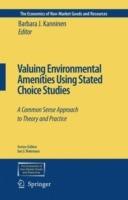
Valuing Environmental Amenities Using Stated Choice Studies: A Common Sense Approach to Theory and Practice
(0)
Cliccando su “Conferma” dichiari che il contenuto da te inserito è conforme alle Condizioni Generali d’Uso del Sito ed alle Linee Guida sui Contenuti Vietati. Puoi rileggere e modificare e successivamente confermare il tuo contenuto. Tra poche ore lo troverai online (in caso contrario verifica la conformità del contenuto alle policy del Sito).
Grazie per la tua recensione!
Tra poche ore la vedrai online (in caso contrario verifica la conformità del testo alle nostre linee guida). Dopo la pubblicazione per te +4 punti 
206,50 €
+2070
punti 
Venditore: IBS
Articolo acquistabile con Carta del Docente

Articolo acquistabile con Carta Cultura Giovani e Carta del Merito

Articolo acquistabile con Carta della Cultura

Paga con Klarna in 3 rate senza interessi per ordini superiori a 39 €

Dati e Statistiche
 Salvato in 0 liste dei desideri
Salvato in 0 liste dei desideri
Valuing Environmental Amenities Using Stated Choice Studies: A Common Sense Approach to Theory and Practice
Disponibilità in 2 settimane
206,50 €
206,50 €
Disponibilità in 2 settimane
Altre offerte vendute e spedite dai nostri venditori
Libri in Inglese
Valuing Environmental Amenities Using Stated Choice Studies: A Common Sense Approach to Theory and Practice
Altri venditori
Prezzo e spese di spedizione
Nuovo
Disponibilità in 2 settimane

Venduto e spedito da
IBS
Spedizione Gratis
206,50 €
Altri venditori
Prezzo e spese di spedizione
Nuovo
Disponibilità in 2 settimane
Venduto e spedito da
IBS
Spedizione Gratis
206,50 €
Altri venditori
Prezzo e spese di spedizione

Tutti i formati ed edizioni
Promo attive (0)
When I was a graduate student, I fell in love with choice models. After years studying the econometrics of the standard linear model, discrete choice offered so many new, cool twists. With contingent valuation (CV) studies abounding, data was plentiful and varied. Every CV dataset had its own kinks and quirks that begged to be addressed through innovative modeling techniques. Dissertation topics were not scarce. We economists like to assume. There are jokes written about this. My assumption, as I slaved over the statistical properties of the double-bounded CV model, was that CV data was good data, representing valid economic choices made by survey respondents. Before I received my Ph.D., this assumption was called into question big time. In 1989, the Exxon-Valdez oil tanker spilled 11 million gallons of oil into Prince William Sound, Alaska. The accident killed a lot of birds, devastated fisheries, harmed area economies and ruined a reputation or two. It also changed the field of environmental valuation. What was once a research field dominated by environmental economists interested in obtaining nonmarket values for environmental amenities was now a legal battleground pitting environmental economists against “traditional” economists who were skeptical of the techniques and procedures used with CV. If Nobel prizes are indicators of quality – and I’m fairly certain they are – the Exxon-Valdez oil spill drew the best and the brightest to scrutinize our field.
Leggi di più
Leggi di meno
Curatore:
Editore:
Collana:
The Economics of Non-Market Goods and Resources
Anno:
2006
Rilegatura:
Hardback
Pagine:
337 p.
Testo in English
Dimensioni:
235 x 155 mm
EAN:
9781402040641

L'articolo è stato aggiunto al carrello
Informazioni e Contatti sulla Sicurezza dei Prodotti
Le schede prodotto sono aggiornate in conformità al Regolamento UE 988/2023. Laddove ci fossero taluni dati non disponibili per ragioni indipendenti da IBS, vi informiamo che stiamo compiendo ogni ragionevole sforzo per inserirli. Vi invitiamo a controllare periodicamente il sito www.ibs.it per eventuali novità e aggiornamenti.
Per le vendite di prodotti da terze parti, ciascun venditore si assume la piena e diretta responsabilità per la commercializzazione del prodotto e per la sua conformità al Regolamento UE 988/2023, nonché alle normative nazionali ed europee vigenti.
Per informazioni sulla sicurezza dei prodotti, contattare productsafetyibs@feltrinelli.it
L’articolo è stato aggiunto alla lista dei desideri
